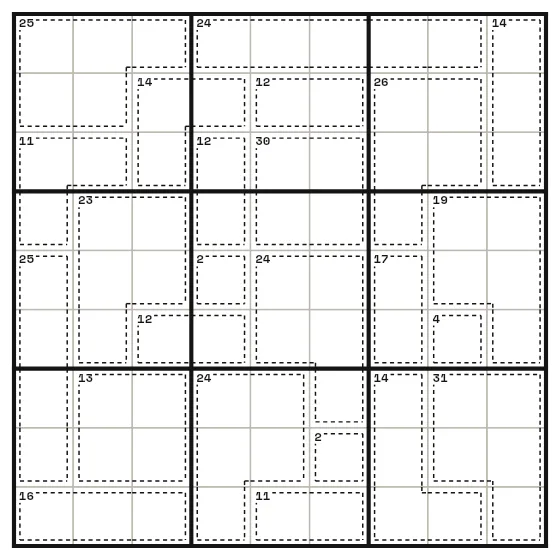
The board above is the daily killer sudoku: one new medium puzzle each day, the same for everyone who opens this page. Fill each dotted cage with digits that add up to its total, with no repeats in a cage, row, column or 3×3 box. There are no starting digits; the sums are all you get.
Logic Puzzle Lab makes pencil-and-paper logic puzzles for adults who want more than the easy end of the newspaper page. Every puzzle here can be played in your browser or printed as a PDF, with the answers on the last pages.
Seven kinds of puzzle
- Killer sudoku: cages with sums instead of given digits, at easy, medium, hard and expert.
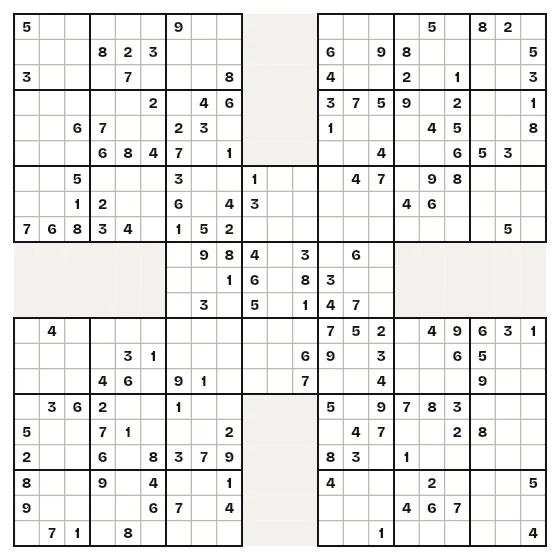
- Samurai sudoku: five 9×9 grids overlapping on one 21×21 board, linked through shared corner boxes.
- Jigsaw sudoku: classic rows and columns, with the nine boxes redrawn as irregular shapes.
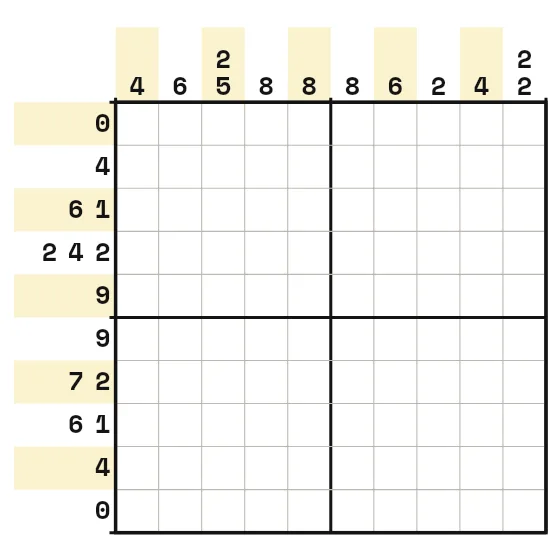
- Nonograms: shade cells to match the number clues, from quick 5×5 grids up to 25×25. Many reveal a small picture we drew ourselves.
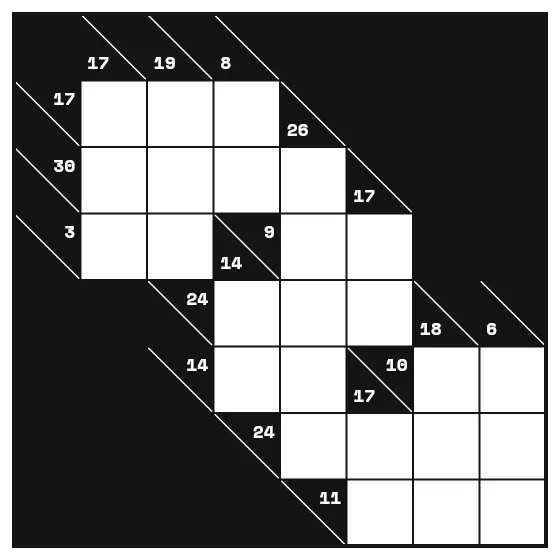
- Kakuro: a crossword made of numbers, where each run of cells adds up to its clue without repeating a digit.
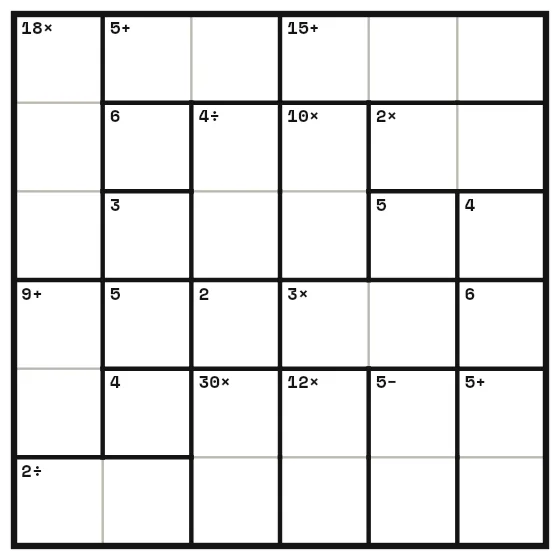
- Calcudoku, also called mathdoku: rows and columns of 1 to N, with cages that add, subtract, multiply or divide to a target, in 4×4, 6×6 and 9×9.
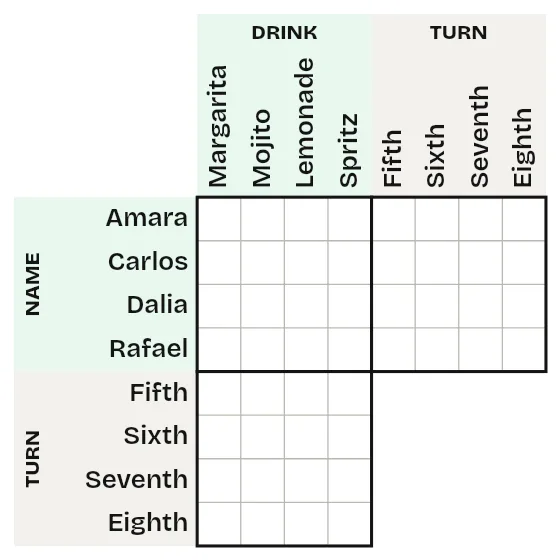
- Logic grid puzzles: short stories and a handful of clues, solved on a yes/no grid, including 5×5 zebra and Einstein-style puzzles.
What's different about these puzzles
Every puzzle is made by our own software and then checked by a solver that proves it has exactly one solution. You will never reach the last few cells and find two ways to finish.
The level on each puzzle means something specific. Our grader solves it step by step the way a person would, cheapest technique first, and the level is the hardest technique it needed. An easy killer sudoku needs cage combinations and singles; an expert one needs patterns like the XY-wing or swordfish. Any puzzle that can't be finished by logic alone, without guessing, is thrown away.
Help when you're stuck
Killer sudoku players can keep the killer sudoku cheat sheet open, or use the cage combinations calculator to list every set of digits that makes a given total in a given number of cells. Kakuro has its own cheat sheet of run combinations, and each puzzle type has a plain-English guide to its rules and techniques.
For nonograms from books and magazines, the nonogram solver works through a grid from its clues. It is handy for checking a printed puzzle you suspect has a mistake.
Play it, then print it
Every puzzle page has a Print PDF button. The printable logic puzzles section gathers numbered packs for each puzzle type, ready to print at home, with the answers at the back so a second person can check your work or you can check your own.
Large print editions of killer sudoku, nonograms, kakuro, calcudoku and logic grids use bigger cells and larger type. They are a good choice for anyone who finds standard puzzle books hard on the eyes, and for printing for an older relative.
Where to begin
If you already play classic sudoku, start with easy killer sudoku or jigsaw sudoku: the rules you know still apply, with one new idea added. Crossword solvers tend to take to logic grids and kakuro. If you'd rather not think about numbers at all, a 10×10 nonogram is a short solve that ends with a picture. Then come back tomorrow for the next daily puzzle.